
 ONLINE APPLICATION
 SMU
 RECEIPT
 DIPLOMA
 Anti-Plagiarism System
 Library
 Webmail
 Contact
.jpg)
University “Fehmi Agani” in Gjakova Promotes Innovation in Teaching Through the Edu4Migration Project
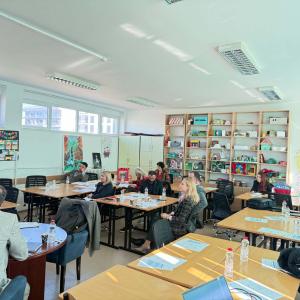
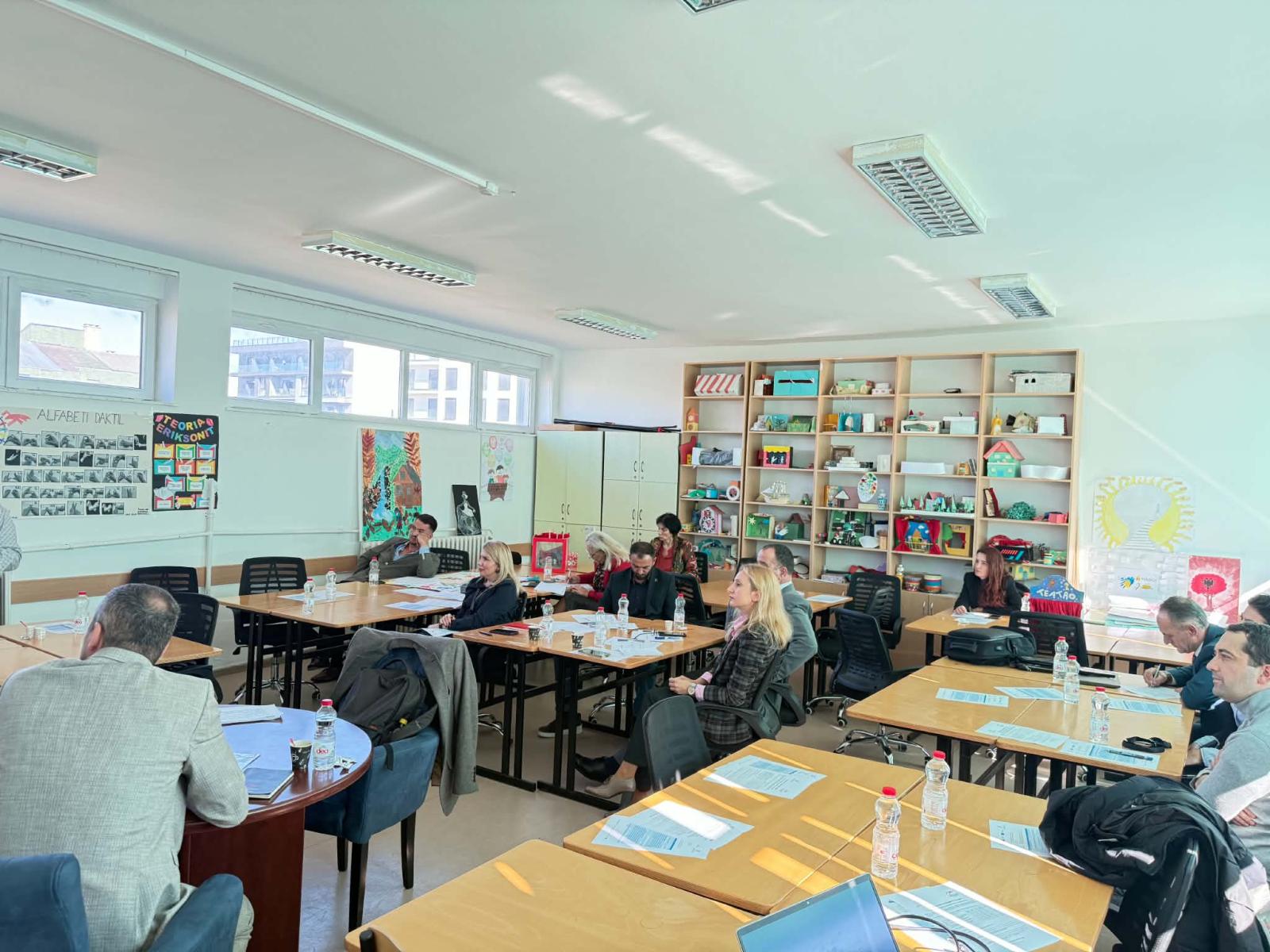
As part of the international Edu4Migration project, a training session entitled “Contemporary Teaching Methodologies” was held today, focusing on innovative pedagogical approaches and improving the quality of the teaching and learning process in the field of social work with refugees and migrants.
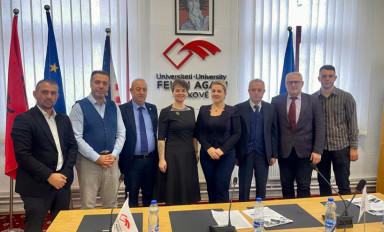
The training was organized by the Didactic Centre for Excellence in Teaching at the University “Fehmi Agani” in Gjakova (UFAGJ) and was delivered by Assoc. Prof. Dr. Ferdi Kamberi and Prof. Dr. Behxhet Gaxhiqi, who were certified in these methodologies through the Training of Trainers programme organized by University College Lillebælt (UCL) in Vejle, Denmark, within the framework of the Edu4Migration project.
The training covered two key approaches to contemporary teaching: Problem-Based Learning (PBL) and Scenario-Based Didactics. These approaches highlighted the importance of actively engaging students in the learning process, developing critical thinking skills, and strengthening their ability to analyse complex situations and make well-reasoned decisions.
The training also addressed topics related to service users in education, as well as the use of Socratic questioning and debate as teaching methods. It was characterized by an interactive approach that included discussions, debates, group work, and practical exercises, providing opportunities for the exchange of professional experiences and the practical application of the methodologies presented.
At this stage, the training brought together academic staff from the Faculty of Social Sciences and the Faculty of Education. In the next phase, the training activities will continue with academic staff from other academic units of the university, with the aim of expanding the application of these approaches across different fields of study.
Through this training and other activities carried out within the Edu4Migration project, UFAGJ aims to strengthen the pedagogical capacities of its academic staff and promote a contemporary teaching culture that integrates theoretical knowledge with practice, collaboration, and critical reflection, contributing to the preparation of professionals to address contemporary societal challenges.
.jpg)
.jpg)
.jpg)
.jpg)
.jpg)
.jpg)
.jpg)
.jpg)

.png)

.jpg)
.jpg)
.jpg)
.jpg)
.jpg)
.jpg)
.jpg)